Au Fait

Retail quadrans
병오년
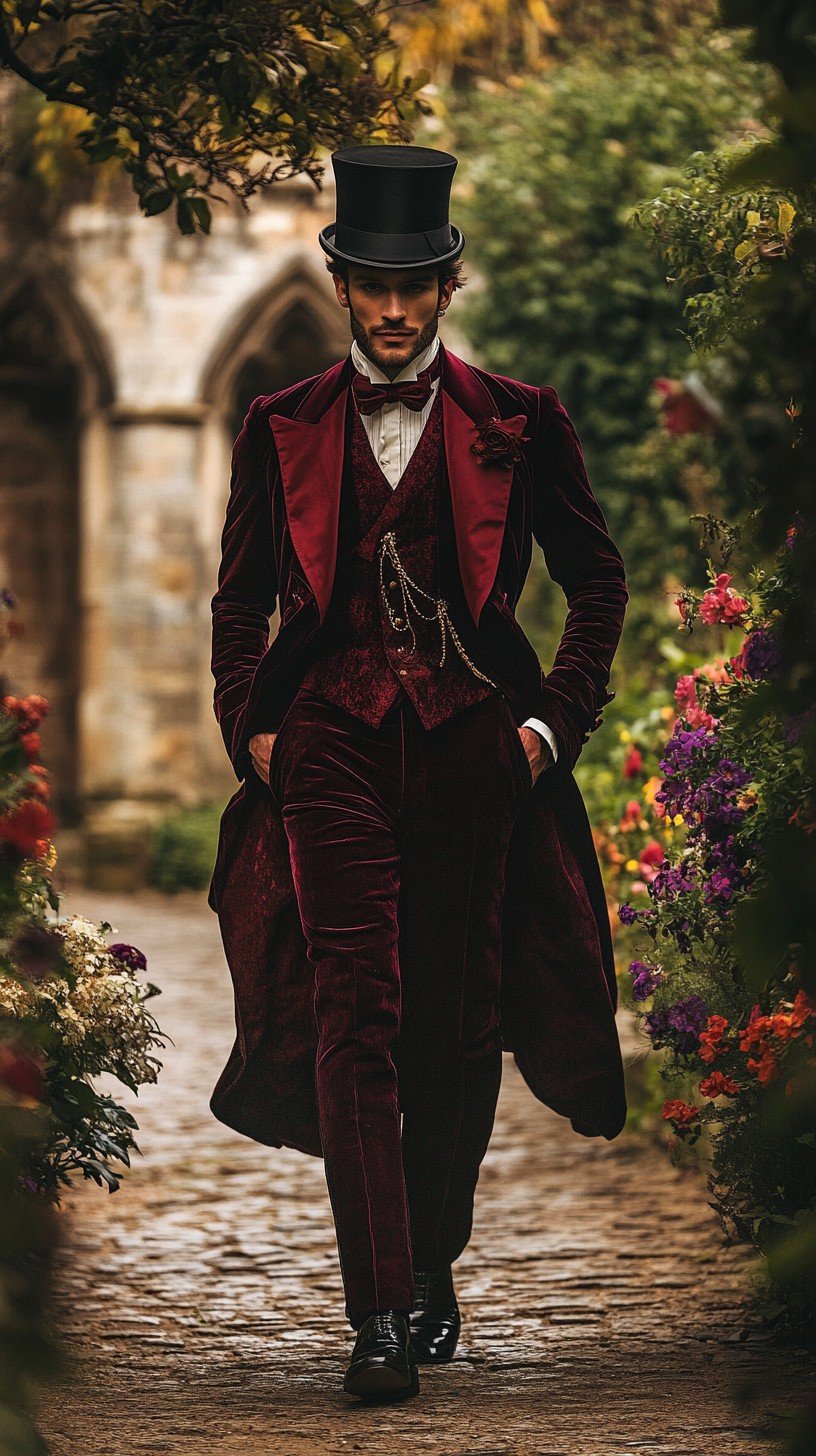
The Trend Report
Wardrobe Tips
How to Tie a Tie
A guide to nine knots — from the everyday to the extraordinaryBefore you tie the knot, choose the right one.
Many men know how to tie only one knot. This is not acceptable. Actually, there are variety of knots with varying complexity that can up one’s tie game as a keen student of sophistication. Each has its place in giving an impression that may or may … not … be suited to a particular occasion, and so I want you to study this small but carefully curated selection of what’s possible, and think about how each could augment your next self-presentation.
But first, we’d be quite remiss to skip a history lesson.
The necktie has a longer history than most men realise. Its origins trace back to 1635, when Croatian mercenaries fighting for King Louis XIII of France arrived at the royal court wearing knotted cloth around their necks — a practical fastening for their uniforms that caught the King’s eye immediately. He mandated it for all royal gatherings and named it la cravate, a word still used for neckwear in French today. From that single military detail, the modern tie was born.
By the 19th century, the cravat had evolved through dozens of incarnations — the stock, the steinkirk, the ascot — before settling into the long, pointed necktie we know now. In 1920, New York tailor Jesse Langsdorf patented a way of cutting fabric on the bias and sewing it in three sections, creating a tie that lay flat, sprang back into shape after wearing, and held a knot with authority. That cut is still the standard today.
What followed was a century of knot-making: from the Victorian gentleman’s carriage club to a Duke’s bespoke Windsor, from a 92-year-old civil servant cornering a news anchor in a TV studio to a bored systems administrator inventing something entirely new in 2007 and posting it on YouTube. The tie has always been a small canvas for individual expression — and the knot is where that expression lives.
The nine knots in this guide range from the essential to the exceptional. The first four are the historical knots every man should know. The last five are 21st century knots for the man who has mastered the classic set and wants to go further. Each knot is appropriate in different situations, with different collar widths, different tie fabrics, and different levels of occasion. Understanding that fit is half the skill.
Four knots. Every man should be comfortable with all of them. Start with the Four-in-Hand. Graduate to the Half Windsor. Add the Full Windsor for power dressing and the Pratt for days when you want something polished but not heavy.
The Four-in-Hand
The Four-in-Hand is the knot most men learn first, and for good reason: it is the most forgiving, the most versatile, and — in the right hands — among the most elegant. Its defining characteristic is a deliberate asymmetry, a slight tilt that gives the knot a nonchalance no perfectly symmetrical knot can replicate. When James Bond wears a tie, it is almost always a Four-in-Hand. When a well-dressed man in a well-tailored suit looks effortless rather than studied, it is almost always the Four-in-Hand doing the work.
A tip worth knowing: a small dimple pressed just below the knot before you tighten it transforms a serviceable knot into a polished one. It takes about five seconds and makes a genuine difference.
The Half Windsor
The Half Windsor is the knot for men who want to look like they gave it some thought. It produces a neat, symmetrical triangle roughly three-quarters the size of the Full Windsor — substantial enough to fill a spread collar without overwhelming a narrower one. It is the most widely appropriate of all the knots here: it works in a boardroom, at a wedding, at a dinner, and at a job interview. If you learn only two knots, make this the second one.
The Half Windsor rewards a medium-weight tie. Too light a fabric and the knot looks insubstantial; too heavy and the result becomes stiff. Silk and wool blends at standard weight are its natural home.
The Full Windsor
The Full Windsor is a statement. It is wide, it is symmetrical, and it fills the space between a spread collar completely. When it is tied well, it signals authority, preparation, and a man who means business. When it is tied badly, it signals a man who bought a clip-on. The difference is in the symmetry — both sides of the triangle must be equal, and the knot must sit snugly between the collar points without gaps.
One practical note: the Windsor requires more length than other knots. Use a tie approximately 4cm longer than standard, or position the wide end lower than usual before you begin.
The Pratt (Shelby)
The Pratt begins with the tie inside out — seam facing outward — which is its one quirk. Once you are past that, it is a logical, efficient knot that produces a compact symmetrical result somewhere in size between the Half Windsor and the Full Windsor. It has a natural dimple built into its structure and uses less length than the Windsors, which makes it ideal for thicker ties or taller men who have struggled to get the right length from other knots.
The Pratt is the knot that quietly impresses. Nobody can quite identify it, but everyone registers that it looks right.
Five knots for the man who has the basics down and wants to go further. These range from the elegantly sculptural to the genuinely extraordinary. None of them belongs in a job interview. All of them belong somewhere.
The Van Wijk
The Van Wijk produces a tall, narrow, almost architectural column at the collar — three visible tiers stacked cleanly, a helical twist running through each layer when tied correctly. Wear it with a solid or subtly textured tie — stripes become chaotic when wrapped three times around.
The main technical challenge is length management. The three loops consume a significant amount of tie, and the narrow end will almost certainly be too short to reach the keeper loop. Tuck it into the shirt, or secure it behind the blade with a small tie bar.
The Cape
Despite its decorative appearance, the Cape is one of the more accessible advanced knots. Because the narrow end does the tying, you set the wide end at your desired final length before you begin and work from there. Five moves. Clean result. The knot reads as complex but rewards the effort quickly.
Stick to solid or tonal ties. The Cape creates its own pattern from the folding, and stripes fighting against that create visual noise rather than interest.
The Cafe
The Cafe sits at the boundary between an advanced everyday knot and a showpiece. Seven front crossings produce a tiered, almost floral effect at the collar — arresting on a solid-colour tie, overwhelming on anything patterned. Think of it as the Eldredge for the man who wants the impact without the full fifteen-step commitment.
The Trinity
The Trinity knot was created in 2004 by Christopher Johnson of Watertown, Wisconsin, inspired — improbably — by the 2003 film The Matrix Reloaded. Johnson named it for the Celtic triquetra, the ancient three-cornered symbol of interconnectedness that appears in Celtic art, Norse runes, and early Christian manuscript illumination. The choice of name was apt: the finished knot’s three-fold rotational symmetry echoes that symbol so naturally that it reads as something far older than twenty years. A knot with a pop culture origin that carries the weight of antiquity. Which is, in its own way, rather stylish.
The Trinity produces a rounded, three-sectioned knot with a symmetry that reads as both complex and balanced. Tied using the narrow end as the active end, which simplifies length management, the result is a conversation piece restrained enough to wear to a formal occasion without looking theatrical.
Practice the Trinity more than any other knot here before wearing it out. Its symmetry is its selling point, and a slightly uneven Trinity is more noticeable than a slightly uneven Windsor.
The Eldredge
The Eldredge is a showpiece — larger than the Windsor, constructed entirely from the narrow end of the tie, involving fifteen separate moves. The result resembles an elaborate braid more than a conventional knot. The narrow end disappears behind the collar when finished, which is part of the effect.
Wear it with a solid tie. Wear it with a simple outfit — the knot is doing enough. Do not wear it to a job interview or anywhere that traditional formality is expected. Wear it somewhere that rewards genuine personal expression, because that is exactly what it is.
The Trinity-Eldredge
The Trinity-Eldredge is not a knot you arrive at — it is a knot you work toward. It presupposes complete fluency with both the Trinity and the Eldredge individually, and combines their logic into a single construction that produces a wide, symmetrical, multi-layered result unlike anything else in this guide. The three-fold symmetry of the Trinity provides the underlying architecture; the diagonal banding of the Eldredge fills and elaborates it.
Use a light tie — standard or lighter. The number of passes required means heavier fabrics become unmanageable before the knot is complete. A solid colour is non-negotiable. And clear your schedule: this is not a knot you tie in the hallway mirror on the way out. It is a knot you sit down with.
The Linwood Taurus
The Linwood Taurus is unlike any other knot in this guide in construction as well as appearance. Where every other knot here works within the basic logic of wrapping and tucking, the Taurus involves moves that have no parallel elsewhere. The result, when achieved, is symmetrical: wide and structured, with two visible horn-like projections that give the knot its name.
Allow yourself significant practice time. The Taurus consumes more tie than almost any other knot here. And accept that when you wear it successfully, almost nobody in the room will be able to explain what they are looking at. That, in the end, is the point.
A final note on the dimple. Whatever knot you tie, whatever collar you wear it with, whatever the occasion — press a small dimple into the front of the tie just below the knot before you pull it tight. Use your index finger to crease the fabric inward, then pinch the sides and draw the knot up. It takes five seconds. It is the single detail that separates a man who ties a tie from a man who wears one.
— JR
Fit is king.
Honestly, even a shirt that you think is ugly, but fits perfectly, is going to look better on you than one that looks great on the rack but doesn’t fit just right. So let’s help you get the right fit.
Capsule wardrobe magic.
The concept of a capsule wardrobe—selecting a limited number of versatile, timeless pieces that work together—was coined by Susie Faux, a visionary London boutique owner in the 1970s. By focusing on quality over quantity, her approach makes it easy to mix and match outfits while maintaining style and simplicity. Our ensembles are designed to give you that same ‘capsule wardrobe magic,’ helping you create cohesive, elegant looks with fewer pieces.
The concept of a capsule wardrobe—selecting a limited number of versatile, timeless pieces that work together—was coined by Susie Faux, a visionary London boutique owner in the 1970s. By focusing on quality over quantity, her approach makes it easy to mix and match outfits while maintaining style and simplicity. Our ensembles are designed to give you that same ‘capsule wardrobe magic,’ helping you create cohesive, elegant looks with fewer pieces.
The concept of a capsule wardrobe—selecting a limited number of versatile, timeless pieces that work together—was coined by Susie Faux, a visionary London boutique owner in the 1970s. By focusing on quality over quantity, her approach makes it easy to mix and match outfits while maintaining style and simplicity. Our ensembles are designed to give you that same ‘capsule wardrobe magic,’ helping you create cohesive, elegant looks with fewer pieces.
The concept of a capsule wardrobe—selecting a limited number of versatile, timeless pieces that work together—was coined by Susie Faux, a visionary London boutique owner in the 1970s. By focusing on quality over quantity, her approach makes it easy to mix and match outfits while maintaining style and simplicity. Our ensembles are designed to give you that same ‘capsule wardrobe magic,’ helping you create cohesive, elegant looks with fewer pieces.
The concept of a capsule wardrobe—selecting a limited number of versatile, timeless pieces that work together—was coined by Susie Faux, a visionary London boutique owner in the 1970s. By focusing on quality over quantity, her approach makes it easy to mix and match outfits while maintaining style and simplicity. Our ensembles are designed to give you that same ‘capsule wardrobe magic,’ helping you create cohesive, elegant looks with fewer pieces.
Timeless Elegance
Recommended products
-
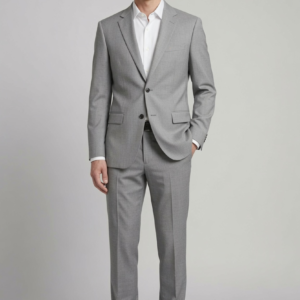
De Bon Aire Gray Suit
$700.00 -
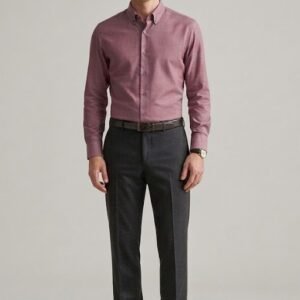
Fig Purple Button-Up Shirt
$124.99 -
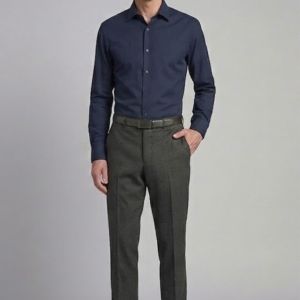
Houndsooth Trouser
$75.00 -
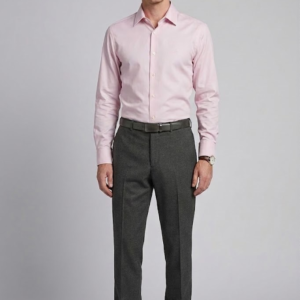
Pink Button-Up Shirt
$120.00 -
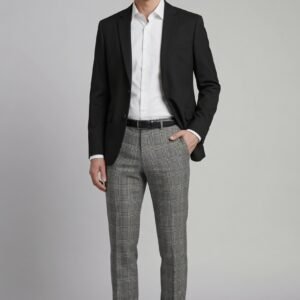
Plaid Trouser
$85.00
Leave a Reply